9:7
Now Herod the tetrarch heard of all the things done by him, and he was in doubt, because it was said
Luke 9:7–9
Today’s interpretive key
Reports of Jesus disturb Herod's guilty conscience, but curiosity alone cannot become the honest encounter that true knowledge of Christ requires.
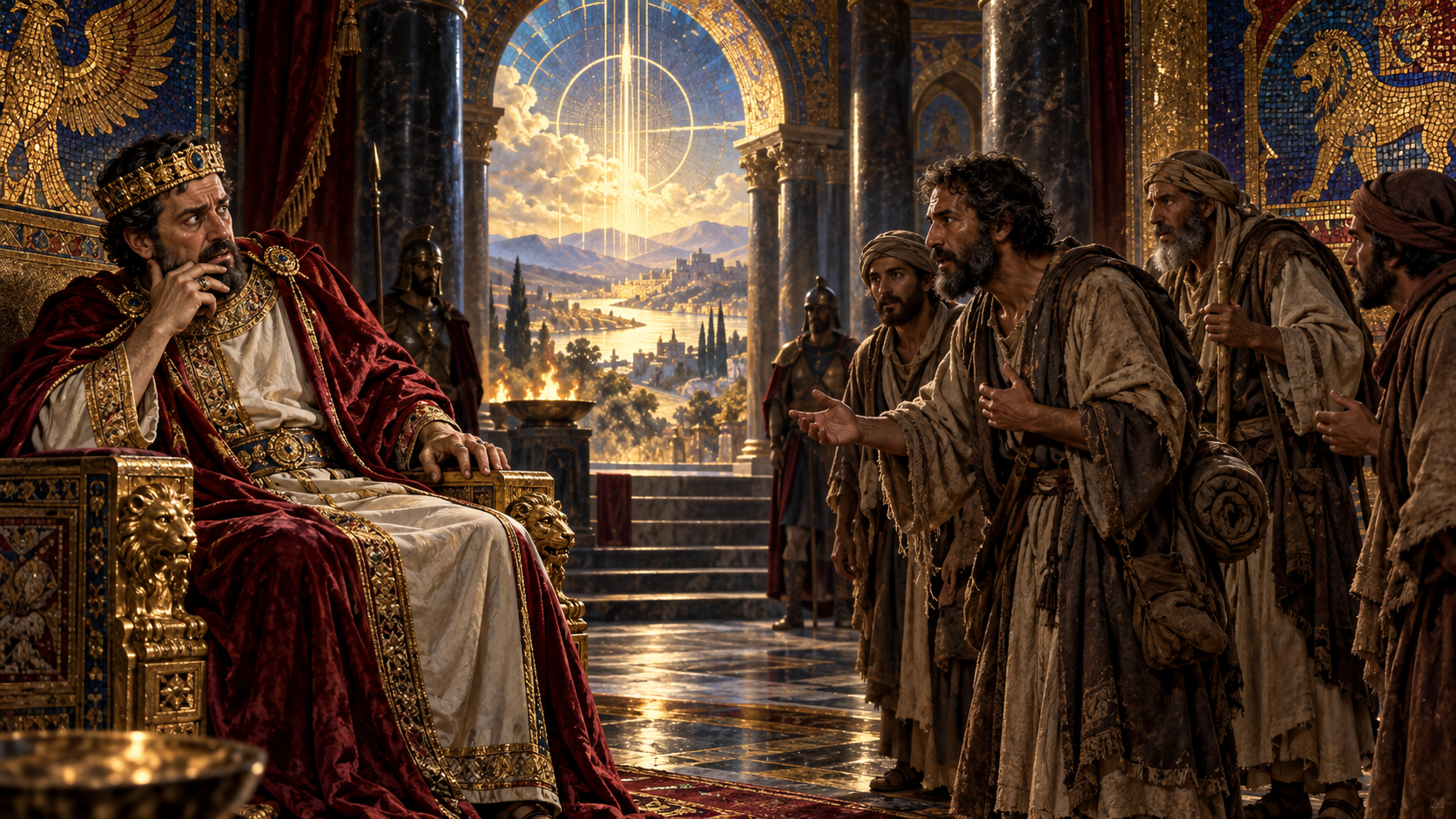
News of Jesus reaches a palace already haunted by violence. Herod hears of mighty works, yet every explanation circles around prophets and resurrection because the truth before him exceeds familiar categories. Luke lets the ruler's perplexity expose a divided heart. Herod has silenced John, but he cannot silence the witness borne by Christ's works or the questions awakened by his own conscience. He wants to see Jesus, though the Gospel leaves us asking what kind of sight he seeks: repentance, reassurance, spectacle, or control. The passage is brief, but it distinguishes hearing about Christ from knowing him. Rumor multiplies names; faith receives the Lord himself. Curiosity can begin a search, yet only humility and conversion can carry it toward truth. Herod's question therefore reaches every hearer: when Christ unsettles our settled explanations, will we defend ourselves from him, or allow the desire to see him to become a willingness to be changed?
Douay-AI, modernized from the public-domain Douay-Rheims Bible. View source ↗
Now Herod the tetrarch heard of all the things done by him, and he was in doubt, because it was said
by some that John had risen from the dead; by others, that Elias had appeared; and by others, that one of the old prophets had risen again.
Theophylact draws attention to the assumptions hidden within the competing reports. Some suppose that John or an ancient prophet has returned to bodily life in the familiar conditions of eating, drinking, and ordinary activity. The rumors therefore confess that something extraordinary is happening, yet they interpret it through inadequate categories. They look backward for a name that can contain Jesus. This is a recurring spiritual danger: genuine signs may awaken us while inherited expectations still narrow our vision. The verse prepares the deeper question of Christ's identity, which cannot be answered by rumor or resemblance alone.
And Herod said, “John I have beheaded; but who is this of whom I hear such things?” And he sought to see him.
Chrysostom interprets Herod's words about John's beheading as self-reassurance rather than triumph. Faced with reports of miraculous power, the ruler tries to master his fear by rehearsing the fact that John is dead. But violence cannot settle the question raised by Jesus. Herod's desire to see him remains morally ambiguous: it may seek verification without repentance, curiosity without surrender. The verse warns that physical sight does not guarantee recognition. To encounter Christ truly, the seeker must relinquish the defenses by which guilt controls the evidence and instead allow truth to judge, forgive, and transform.
Herod hears enough to become perplexed, but hearing is not yet discipleship. A guilty conscience can turn every report into a threat, while curiosity can reduce Jesus to one more marvel to inspect. The Gospel invites a different response. Bring Christ the question beneath your questions: not merely “Who is this?” but “What in me resists knowing him truthfully?” Name the memory, fear, or cherished control that makes his presence unsettling. Then seek him where he has chosen to be known—in prayer, Scripture, the sacraments, and obedient love of neighbor. The desire to see Jesus becomes fruitful when we consent to be seen by him. His light does not expose us to humiliate us; it reveals what mercy desires to heal and calls us beyond rumor into communion.
Read the source Catena Aurea ↗
Chrysostom observes that Herod notices Jesus only after much time has passed, revealing the self-absorption of a ruler who had ignored what was unfolding beyond his court. Yet the reports finally penetrate the palace, and Herod cannot remain indifferent. His uncertainty is not the peaceful wonder of a disciple; it is agitation sharpened by guilt. Sin distorts the act of hearing, making truth appear threatening before it is understood. Christ's works summon every person to attention, but pride and an unrepented conscience can turn that summons into confusion and fear.