9:18
And it happened, as he was praying alone, with his disciples beside him, that he asked them, saying, “Who do the people say that I am?”
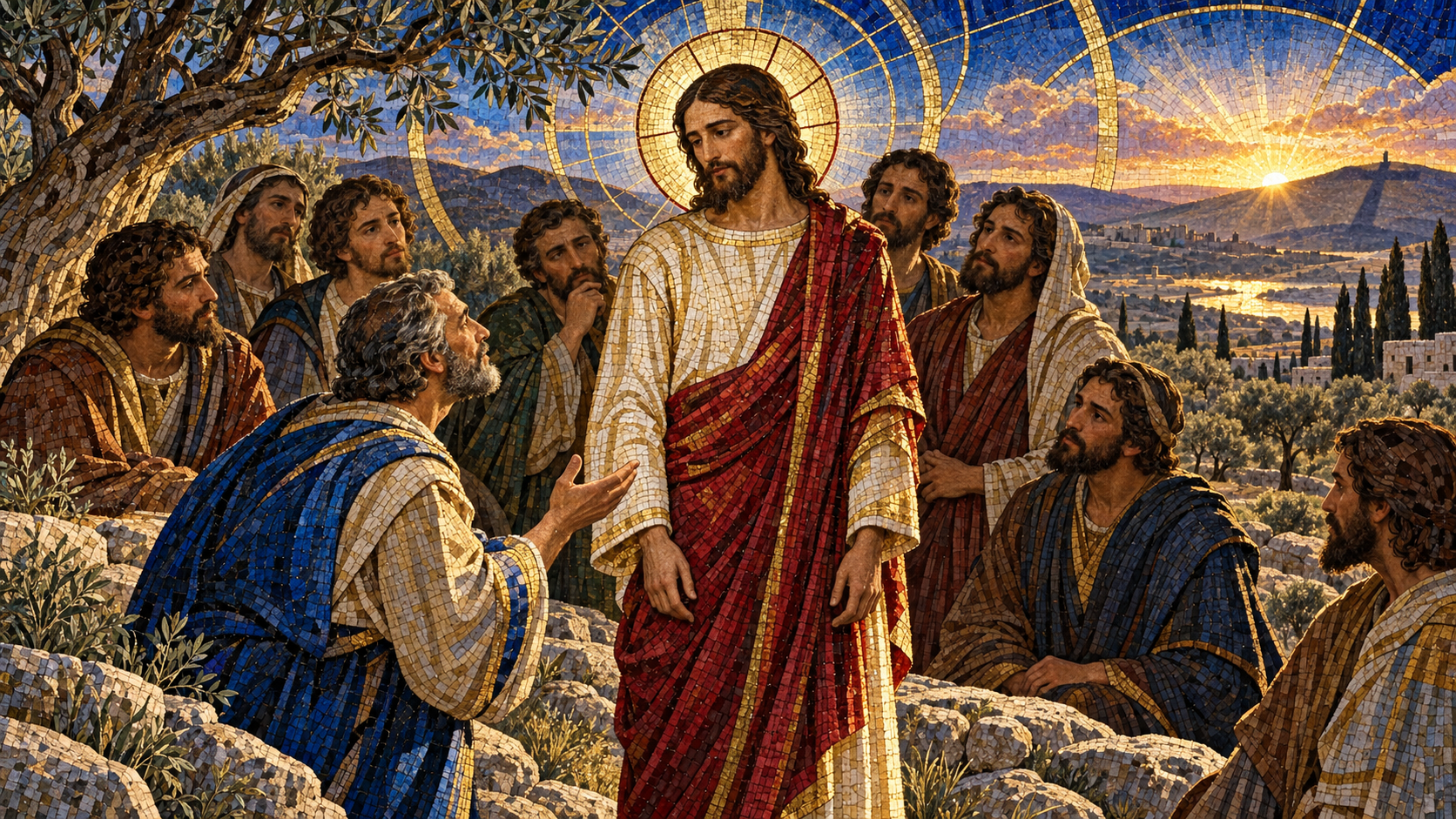
Luke 9:18–22
Today’s interpretive key
Peter names Jesus as God's Christ, and Jesus immediately reveals that his messianic glory must be understood through suffering, rejection, death, and resurrection.
Jesus begins in prayer and then asks a question that moves from public rumor to personal faith. The crowds have noticed his power, but they fit him into familiar categories: John, Elijah, or an ancient prophet returned. Peter goes further. Speaking for the disciples, he confesses Jesus as the Christ of God. Yet the title can still be misunderstood, filled with dreams of visible triumph or political power. Jesus therefore joins the confession to the mystery of his Passion. The Christ will suffer, be rejected and killed, and rise on the third day. The sequence is essential: his identity is not separated from the self-giving path by which he saves. Luke invites every disciple to hear the question personally. Faith cannot remain a report about what others think. It must answer Christ, receive the whole truth of his mission, and trust that divine victory comes not by escaping the cross but through love stronger than death.
Douay-AI, modernized from the public-domain Douay-Rheims Bible. View source ↗
And it happened, as he was praying alone, with his disciples beside him, that he asked them, saying, “Who do the people say that I am?”
They answered and said, “John the Baptist; but some say Elijah, and others that one of the former prophets has risen again.”
Ambrose treats these popular opinions as serious rather than trivial. John had been executed, Elijah was expected, and the ancient prophets embodied Israel's hope; to place Jesus among them acknowledged something extraordinary. Yet every answer still measures him by a previous servant of God. The crowd sees signs of holiness and power but has not reached the mystery of the Son. Respectful error can remain error. The verse therefore asks us to examine whether our own admiration keeps Jesus within categories we can manage, instead of receiving who he truly is.
He said to them, “But who do you say that I am?” Simon Peter answered, “The Christ of God.”
Cyril hears decisive force in the word “you.” Those called as apostles have lived beside Jesus and witnessed his works; they must answer from that encounter rather than repeat the uncertainty outside. Peter becomes the voice of the whole company and names Jesus not as one anointed figure among many, but as the Christ who belongs uniquely to God. Cyril also safeguards the unity of Christ: the Son whom Peter sees in human form is the eternal Word made man. True confession holds his divinity and incarnation together without division.
But he strictly charged them and commanded them to tell this to no one,
Chrysostom says Jesus restrains the disciples because a true title could be received through false expectations. If people acclaimed him as Christ and then saw rejection, mockery, and crucifixion without understanding, their newly planted belief might be torn up by scandal. The Lord therefore prepares a firmer proclamation, one made after his sufferings have been accomplished. Silence here serves the fullness of truth. Christian witness is not mere urgency; it must present Christ as he has revealed himself, refusing to separate his glory from the saving Passion through which that glory is disclosed.
saying, “The Son of Man must suffer many things, be rejected by the elders, chief priests, and scribes, be killed, and rise again on the third day.”
Cyril connects the temporary command of silence with the events that must come first. The apostles are indeed chosen to preach Christ throughout the world, but their proclamation must rest on the completed mystery of the cross and resurrection. Jesus therefore interprets his Messiahship before events unfold: rejection and death do not disprove Peter's confession, and resurrection is not an afterthought. Together they reveal how the Christ saves. Faith must receive the whole movement named by the Lord, trusting divine necessity even where human expectations see only defeat.
Jesus does not ask for a borrowed answer. The opinions of the crowd may begin the conversation, but discipleship becomes personal when he asks, “Who do you say that I am?” Peter's confession is true, yet Jesus protects it from becoming a slogan shaped by worldly ambition. The Christ is known in the mystery of his suffering, death, and resurrection. Bring your own answer into prayer today. Name Jesus truthfully, then notice where you still expect him to save without the patience, humility, or self-giving love of the cross. Ask for the grace to receive the Lord as he reveals himself, not as fear or desire would redesign him. Christian confession matures when lips, choices, and hope agree: Jesus is God's Christ, and the risen life he gives is reached by faithful love that does not flee when sacrifice begins.
Read the source Catena Aurea ↗
Cyril observes that Jesus withdraws from the multitude and prays, teaching his disciples through action before he teaches them by words. His question does not seek information he lacks. Rather, he draws into the open the reports circulating among the people so that the disciples can leave those partial judgments behind. Prayer frames the confession that follows: knowledge of Christ is not merely public analysis but a truth received near him. The Lord patiently leads his disciples from what they have heard others say toward the faith they themselves must profess.