9:1
Then, calling together the twelve apostles, he gave them power and authority over all devils and to cure diseases.
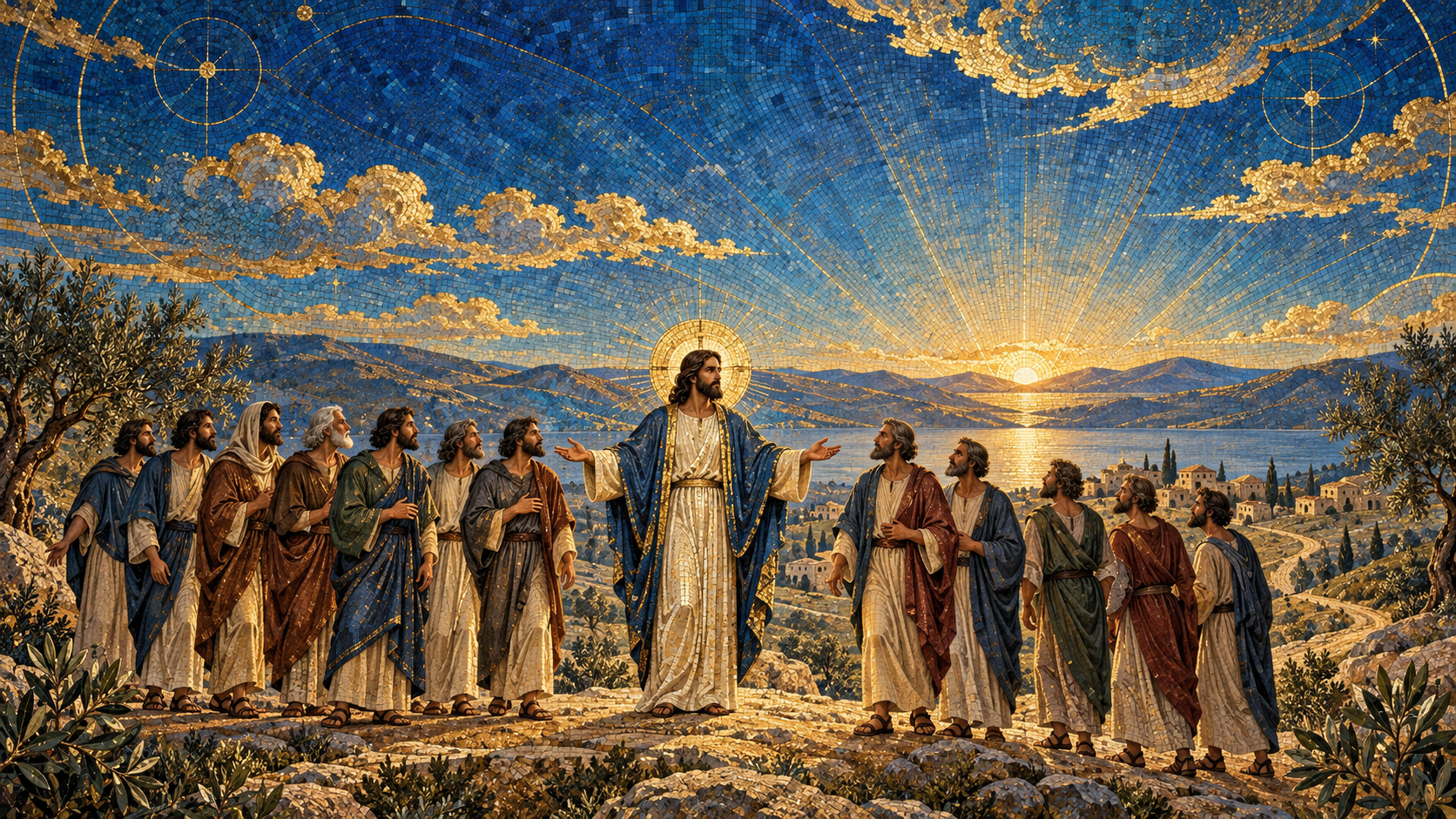
Luke 9:1–6
Today’s interpretive key
Jesus gives the Twelve authority for healing and proclamation, then teaches them to travel in poverty, depend on providence, and leave the results of their witness to God.
The mission of the Twelve begins not with their resources but with Christ’s gift. He calls them together, shares authority over evil and disease, and sends them to announce the kingdom of God. Their manner of travel must reveal the message they carry: free of anxious accumulation, undistracted by comfort, and willing to receive ordinary hospitality. They are neither spiritual entrepreneurs nor wandering seekers of advantage. They remain where welcomed, and where the word is refused they depart without coercion, leaving a sober testimony behind. The final verse joins proclamation and healing in obedient action. What Jesus commands, the apostles actually do. This commissioning shows Christian mission as participation in the Lord’s work—dependent on his power, credible through simplicity, patient with human freedom, and directed toward the wholeness of those who hear.
Douay-AI, modernized from the public-domain Douay-Rheims Bible. View source ↗
Then, calling together the twelve apostles, he gave them power and authority over all devils and to cure diseases.
And he sent them to preach the kingdom of God and to heal the sick.
Chrysostom notes that Jesus sends the Twelve only after they have been formed by his guidance and have witnessed convincing signs of his power. Their proclamation now rises beyond promises of land or temporal goods: they announce the kingdom of God and all the blessings contained within it. Healing accompanies the word, making mercy visible in wounded bodies and confirming that the kingdom concerns the restoration of the whole person. Yet both preaching and healing remain entrusted tasks. The disciples do not advertise themselves; they bear a message and a remedy whose origin, authority, and goal are found in Christ.
And he said to them: “Take nothing for your journey: neither staff, nor bag, nor bread, nor money; and do not have two coats.”
Gregory places these severe travel instructions within the preacher’s whole vocation. Christ’s messengers are to be virtuous, steadfast, temperate, and heavenly, so that their conduct carries the Gospel beside their words. Going without money, provisions, and spare clothing is therefore not a theatrical contempt for creation. It trains and displays an undivided reliance on God, freeing the disciples from the suspicion that they preach for gain. Their lack becomes a form of testimony: the kingdom they announce is valuable enough to command their attention and secure enough to release their anxious grasp on ordinary guarantees.
And whatever house you enter, remain there, and depart from there.
Cyril answers the practical question raised by the apostles’ poverty: their necessities will be supplied through disciples who receive spiritual goods and respond with temporal hospitality. Jesus nevertheless commands the missionaries to remain in one house. Stability keeps them from burdening a succession of hosts and prevents any appearance that they are searching for richer meals or more comfortable lodging. Dependence thus requires humility on both sides. The preacher accepts care without entitlement, while the household serves without purchasing favor. By staying until departure, the apostles show that communion in the Gospel matters more than social advantage.
And whoever will not receive you, when you go out of that city, shake even the dust from your feet as a testimony against them.
Bede explains that the dust shaken from the apostles’ feet bears witness to their labor: they really entered the place, and the apostolic preaching reached its inhabitants. The gesture is not permission for wounded pride or theatrical anger. It marks a grave refusal and allows the messenger to leave without carrying away either support from those who despised the Gospel or contamination from their empty works. The disciples cannot compel faith, but neither may they disguise rejection as harmless. Having offered the saving word, they entrust judgment to God and continue the mission with chastened freedom.
And going out, they went through the towns, preaching the Gospel and healing everywhere.
Eusebius gathers the passage’s movement into a single image: Christ equips the disciples like soldiers of God, then sends them among the people as both teachers and physicians. Divine power and wise commands precede their activity; only then do they go. Their obedience is concrete and extensive, carrying the Gospel through the towns and healing everywhere rather than preserving Christ’s gifts within their own circle. Teaching addresses ignorance, while healing meets affliction, and both reveal the generosity of the sender. The verse’s simplicity is its challenge: what Christ gave and commanded, the apostles received and performed without delay.
Christ does not wait for perfect equipment before he sends his disciples. He supplies what the mission truly requires: his call, his authority, and the kingdom’s saving word. The poverty he commands exposes the temptation to trust preparation more than providence, while the instruction to remain in one house protects ministry from restless self-seeking. Even rejection does not authorize resentment or force. The witness is made plain, the dust is shaken off, and the messenger continues. Ask today what excess—material, emotional, or reputational—keeps you from prompt obedience. Lay it down, receive gratefully what God provides through others, and take one concrete step toward someone who needs truth joined to mercy. Fruitfulness belongs to Christ; faithfulness is the disciple’s work.
Read the source Catena Aurea ↗
Cyril distinguishes the apostles’ received power from Christ’s power by nature. Holy people can become instruments of miracles through participation in the Holy Spirit, yet no creature possesses the Spirit’s gifts as a private resource to distribute at will. Jesus does more than ask another power to assist the Twelve: he gives them authority over devils and disease from his own fullness. The commissioning therefore discloses who the sender is. The apostles will act truly, but never independently; their ministry remains participation in the divine authority of the Son who calls, equips, and sends them.