17:20
When the Pharisees asked him when the kingdom of God would come, he answered them: The kingdom of God does not come with observation.
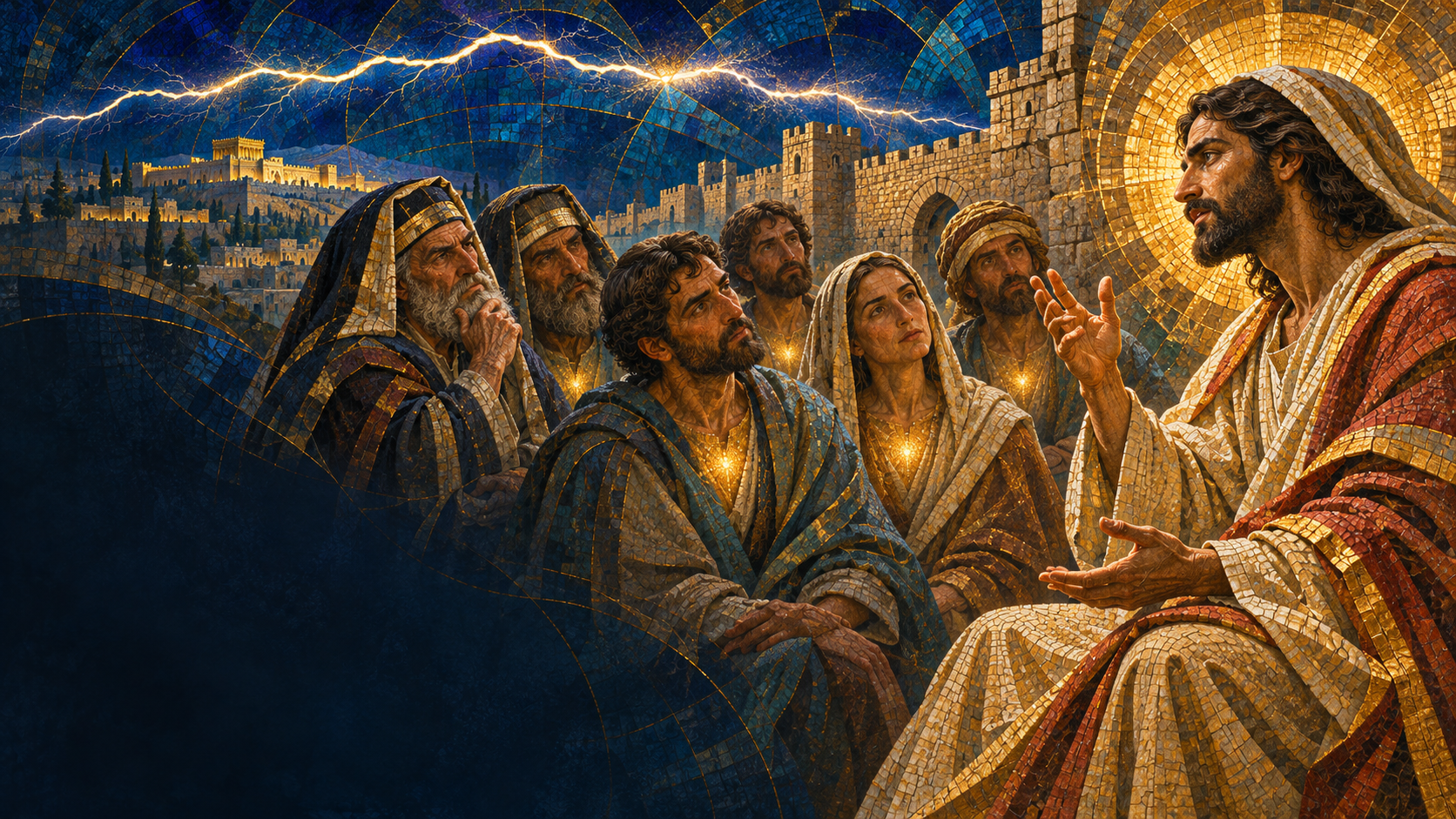
Luke 17:20–25
Today’s interpretive key
Receive God's kingdom in the heart, and await the Son of Man without chasing after signs.
The Pharisees ask when the kingdom will come. Jesus turns their attention to its presence within them, then prepares his disciples for absence, suffering, and his coming in glory. Cyril reads the passage as an invitation to receive God's grace. Bede warns that even a rightful longing for Christ must not make us mistake rumours for his return.
Douay-AI, modernized from the public-domain Douay-Rheims Bible. View source ↗
When the Pharisees asked him when the kingdom of God would come, he answered them: The kingdom of God does not come with observation.
Nor will they say: Look here, or look there. For behold, the kingdom of God is within you.
Cyril reads these words as spoken for the benefit of each person who hears them. Receiving the kingdom concerns the hearer's own heart; looking elsewhere will not answer that need. He explains that a person justified by faith and the grace of God, and adorned with virtues, may obtain the kingdom of heaven. His account holds inward reception together with God's grace and a virtuous life. The kingdom within is therefore an invitation to receive what Christ announces, rather than merely to enquire about the time of its appearance.
He said to his disciples: The days will come when you will desire to see one day of the Son of man, and you will not see it.
Cyril connects this warning with the promise that the kingdom is within. Jesus wants his disciples to be strong enough to enter that kingdom, and so prepares them for suffering before his final coming from heaven. The persecution will be so severe that they will wish to see even one of the days when they walked with him. Those earlier days had their own dangers: Jesus endured insults, threats of stoning, and an attempt to throw him from a mountain. Yet those troubles will seem slight beside the trials still to come.
They will say to you: See here, and see there. Do not go after them or follow them.
Bede offers a reading of the preceding verse in which the day of Christ means his kingdom, the blessed time whose glory no darkness will disturb. Longing for that day is right. But he immediately places a limit on what longing may lead us to suppose: eagerness must not make us imagine that the day is already at hand. He connects this caution directly with Jesus' warning about people saying that Christ is here or there. Hope for the kingdom must not turn such announcements into grounds for following them.
For as the lightning that flashes from under heaven shines to the regions under heaven, so will the Son of man be in his day.
Eusebius reads the warning about rival announcements in connection with the coming of Antichrist. A report that Christ has appeared in some secluded place must not draw the disciples away. The true Christ will not return to dwell unnoticed in a corner of the earth. Lightning gives the sign of his coming: its sudden brightness suggests a radiance that fills the whole world. Eusebius therefore contrasts an ordinary man walking in a particular place with the Saviour making the light of his divinity manifest to all.
But first he must suffer many things and be rejected by this generation.
Cyril explains that the disciples still supposed Jesus would go to Jerusalem and immediately reveal the kingdom of God. The word 'first' corrects their expectation. Before the glorious coming described by the lightning, Christ must undergo his life-giving Passion. Cyril then follows the sequence beyond that suffering: Christ ascends to the Father and shines forth from above to judge the world in righteousness. The warning about rejection belongs within this account of his mission. Jesus prepares the disciples to recognise that the Passion precedes the glory they are expecting.
Jesus speaks of glory without concealing the suffering that comes first. Bede hears consolation in that order: the promise of glory steadies the disciples when they see Christ die, and prepares those who love his kingdom to face death without terror.
Read the source Catena Aurea ↗
Cyril understands the Pharisees' question against their scorn for Jesus' frequent teaching about the kingdom. They expect his death rather than the fulfilment of his promise. Jesus does not answer their contempt with contempt. Instead, he redirects them from trying to discover the time of the kingdom's coming. Cyril distinguishes this from the Incarnation, which prophets foretold and angels announced: the time now in question cannot be observed by men or angels. The answer also corrects the expectation that entering Jerusalem will immediately bring a visible manifestation of the kingdom.