12:54
And he also said to the multitudes: When you see a cloud rising from the west, you immediately say: A shower is coming; and so it happens.
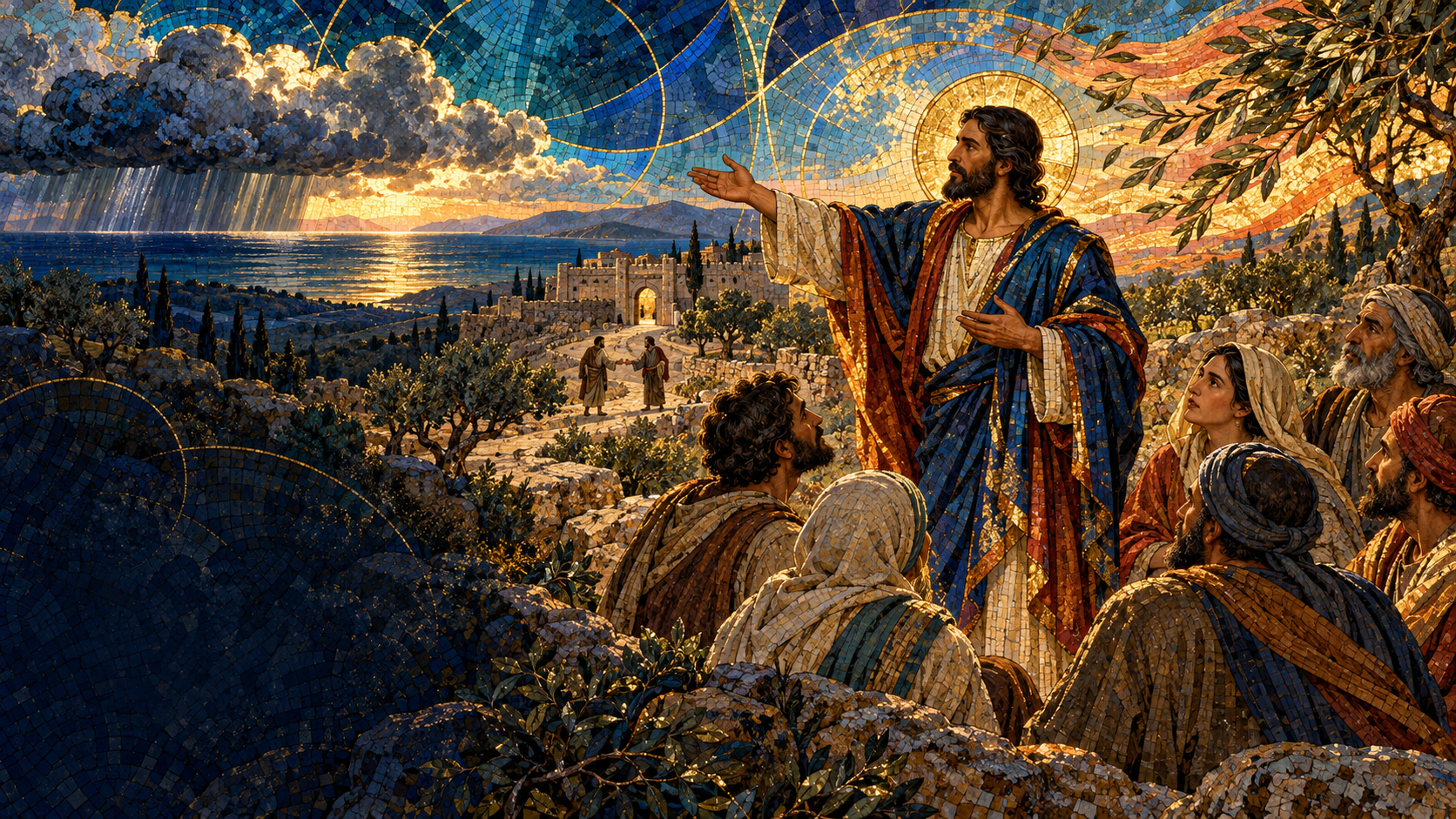
Luke 12:54–59
Today’s interpretive key
The signs of salvation call for more than observation: recognize Christ, and seek reconciliation while there is time.
A cloud in the west and a warm wind from the south are signs the crowd knows how to read. Jesus asks why that same attentiveness does not reach the time of his coming. The Fathers connect his challenge with the prophets, his extraordinary works, and the human capacity to recognize what is right. Then the scene shifts to a road leading toward judgment. The warning is urgent: do not postpone the reconciliation that can still be sought along the way. These familiar pictures of weather and debt turn our attention toward the grace and responsibility of the present moment.
Douay-AI, modernized from the public-domain Douay-Rheims Bible. View source ↗
And he also said to the multitudes: When you see a cloud rising from the west, you immediately say: A shower is coming; and so it happens.
And when you see the south wind blow, you say: There will be heat; and it comes to pass.
Basil notes that observations of the heavens can serve human life, provided inquiry into their signs is not carried beyond its proper limits. Such observations can indicate approaching rain, heat, and the strength of winds, whether a storm will be widespread or local, violent or gentle. A sailor needs warning of dangerous storms; a traveler needs to know changing weather; a farmer needs to anticipate the conditions of a harvest. This everyday usefulness explains why the crowd understands the example Jesus has chosen.
You hypocrites, you know how to discern the face of heaven and earth; but how is it that you do not discern this time?
Cyril explains that the prophets had foretold the mystery of Christ in many ways. Wise hearers should therefore have looked beyond their immediate concerns and recognized what those promises meant. He takes the weather imagery seriously as a warning, connecting it with the reality of future punishment, but also with the present time of salvation. The coming of the Saviour has brought true devotion into the world. Christ’s rebuke exposes the failure to recognize this decisive time, despite the witness that had already prepared his hearers for it.
And why, even for yourselves, do you not judge what is just?
Bede hears Jesus answering a possible excuse: some might say they cannot recognize the times because they do not know the prophetic books. The Lord therefore appeals to their own ability to judge what is right. Even without such learning, they could consider works unlike those done by any other man and recognize that their author is above merely human power and is God. Bede connects this recognition with judgment: beyond the injustices of the present world, the just judgment of creation is still to come.
And when you go with your adversary to the ruler, while you are on the way, make every effort to be delivered from him, lest he drag you to the judge, and the judge hand you over to the officer, and the officer cast you into prison.
Ambrose offers a spiritual reading of the adversary: the devil who entices us into sin, a vicious practice, or an evil conscience that troubles us now and will accuse us hereafter. The journey is the course of this life. While it continues, we should seek deliverance from every evil act as from an enemy and condemn our own fault. Ambrose then looks toward Christ, to whom judgment of the living and the dead is entrusted. The warning urges present repentance before hidden deeds are brought to light.
I say to you, you will not come out of there until you pay the very last mite.
Chrysostom understands this warning as speaking about earthly judges, the road to an earthly hearing, and imprisonment in this world. He sees a teaching method fitted to hearers who need something immediate and visible. Christ does not teach only through promises and warnings about the life to come; he also draws lessons from consequences already familiar to his listeners. The insistence on paying the final small coin belongs to that concrete warning. An ordinary legal danger can awaken attention where a more distant prospect has not yet done so.
It is possible to notice every change in the weather and overlook the call of God. Bede asks us to recognize Christ through the witness already given; Ambrose asks us to condemn our own fault while this life’s journey continues. Let today’s discernment become something concrete: acknowledge a wrong, turn from a harmful practice, or seek a reconciliation you have delayed. The road is not merely a place of waiting. It is where a response can still be made.
Read the source Catena Aurea ↗
Bede places the familiar skill of forecasting weather beside the more important task of recognizing the Lord. People can observe changes in the elements and, when they choose, judge what weather is approaching. The same willingness to attend could lead them to understand the time of Christ’s coming through the words of the prophets. Their ordinary powers of observation therefore become a challenge rather than an excuse. The question is whether they will bring a comparable attention to the witness God has already given.