18
Hear, therefore, the parable of the sower.
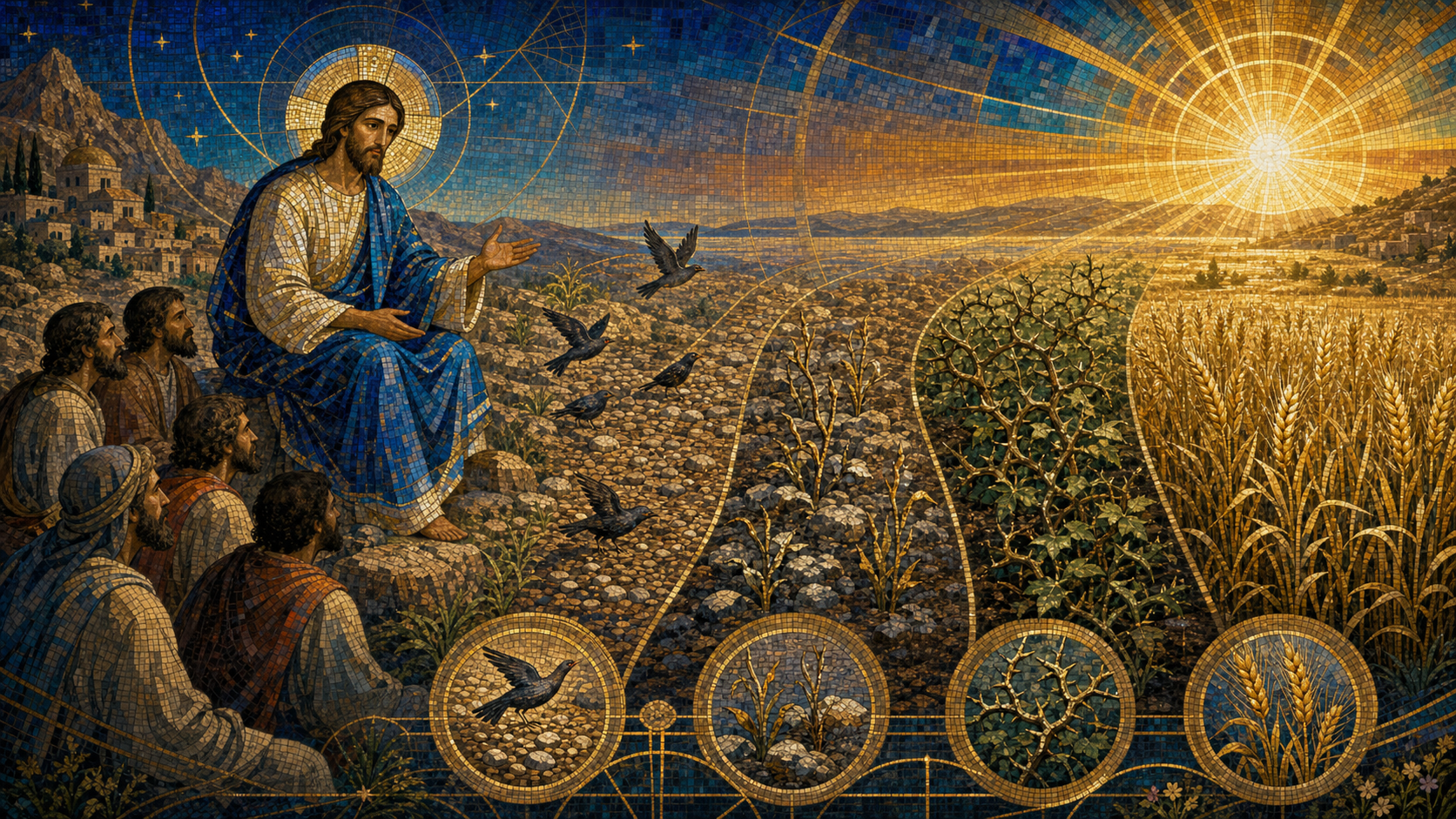
Matthew 13:18–23
Today’s interpretive key
The same divine word reaches every heart, yet attention, endurance, freedom from worldly entanglement, and obedient understanding determine whether it can bear fruit.
Jesus does not leave the disciples with an unexplained image. He names the forces that resist the word: incomprehension exposed to the wicked one, shallow enthusiasm without roots, and a divided heart crowded by anxiety and riches. Yet the final soil reveals that none of these failures defines the seed. The word remains living and fruitful wherever it is heard, understood, and allowed to take root. The question is not whether the Sower is generous, but what kind of ground we permit grace to cultivate within us.
Douay-AI, modernized from the public-domain Douay-Rheims Bible. View source ↗
Hear, therefore, the parable of the sower.
When anyone hears the word of the kingdom and does not understand it, the wicked one comes and snatches away what was sown in his heart. This is the one who received the seed by the wayside.
Remigius identifies the seed as the Gospel teaching, the word that leads into the kingdom. Its failure by the wayside does not come from any defect in the seed. The hearer receives it without devotion of heart, so the word remains vulnerable to being carried away at once by demonic influence. The image joins understanding to spiritual receptivity: incomprehension is not treated as a merely intellectual limitation, but as a heart left open to every passing pressure except the word itself. Attention, desire, and reverence help the teaching sink beneath the trampled surface, where the enemy cannot so easily seize it.
The one who received the seed upon stony ground is the one who hears the word and immediately receives it with joy.
Remigius does not condemn the joy with which this hearer receives the word; the problem lies beneath that first response. Stony ground represents a heart still hard and undisciplined, with only a thin desire for heavenly realities. The seed springs up because something real has been heard and welcomed, yet it cannot drive roots through what the will has refused to surrender. Emotion may open the door to faith, but lasting discipleship also requires conversion of the ground itself. The verse therefore asks whether delight in God's word is being joined to the patient interior work that gives truth room to descend and remain.
Yet he has no root in himself, but lasts only for a time; and when tribulation and persecution arise because of the word, he immediately falls away.
Jerome focuses on the speed of the fall. There is a difference, he says, between someone finally broken by many tribulations and torments and someone who abandons Christ at the first onset of persecution. The rocky hearer has welcomed the word without allowing it to become rooted conviction, so opposition immediately reveals the shallowness of the bond. Trial does not manufacture the weakness; it uncovers what joy had temporarily concealed. Perseverance grows when the word is permitted to enter memory, judgment, habit, and will. A faith with roots may still tremble under suffering, but it does not treat hardship as proof that the word has failed.
And the one who received the seed among thorns is the one who hears the word; but the care of this world and the deceitfulness of riches choke the word, and he becomes fruitless.
Jerome connects the thorns with a life surrendered to worldly cares and delights. Such a person still eats heavenly bread—the word has truly been heard—but receives it amid growth that competes for the whole field. Riches are especially treacherous because they promise one thing and deliver another; their possession is unstable, and their imagined security relaxes the soul's strength for virtue. The danger is not simply owning material goods but allowing anxiety and wealth to occupy the attention obedience requires. The word is not disproved or destroyed. It is crowded until the hearer's life gives it no open space in which to bear fruit.
But the one who received the seed upon good ground is the one who hears the word, understands it, and bears fruit, yielding in one case a hundredfold, in another sixty, and in another thirty.
Jerome notices a threefold difference in the fruitful soil just as there were three forms of failure: the hundredfold, sixtyfold, and thirtyfold harvests. The seed and human nature remain the same; what changes is the will with which the heart receives the word. For every fruitful disciple the order is essential: first hear, then understand, and after understanding bring forth the works of teaching. Different yields do not make the lesser harvest barren. They show the varied abundance grace can produce in receptive lives. Christ calls each hearer away from comparison and toward the concrete fruit that faithful understanding should now bear.
The Lord's explanation turns a familiar landscape into an examination of the heart. A path can be softened, stones can be cleared, and thorns can be uprooted; the conditions that frustrate the word need not be final. Hearing becomes fruitful through understanding, perseverance, and a freedom that refuses to let passing cares rule the soul. Even the good ground yields in different measures, so discipleship is not a contest of identical results. What matters is that the seed is retained and brought to fruit. Christ speaks plainly so that we may recognize what chokes his word and offer him soil ready for cultivation.
Read the source Catena Aurea ↗
Jerome draws attention to a rare gift in the Gospel: the Lord does not merely tell the parable but supplies its interpretation. That makes this invitation to hear an act of mercy and a rule for reading. The disciples are not asked to invent meanings according to taste; they are summoned to receive the mysteries Christ entrusts to them. Jerome therefore warns against explaining the image either beyond or beneath what Jesus teaches. True understanding begins with attentive submission. The hearer becomes good soil first by allowing the divine Teacher, rather than private cleverness, to determine the sense of his own word.