16:21
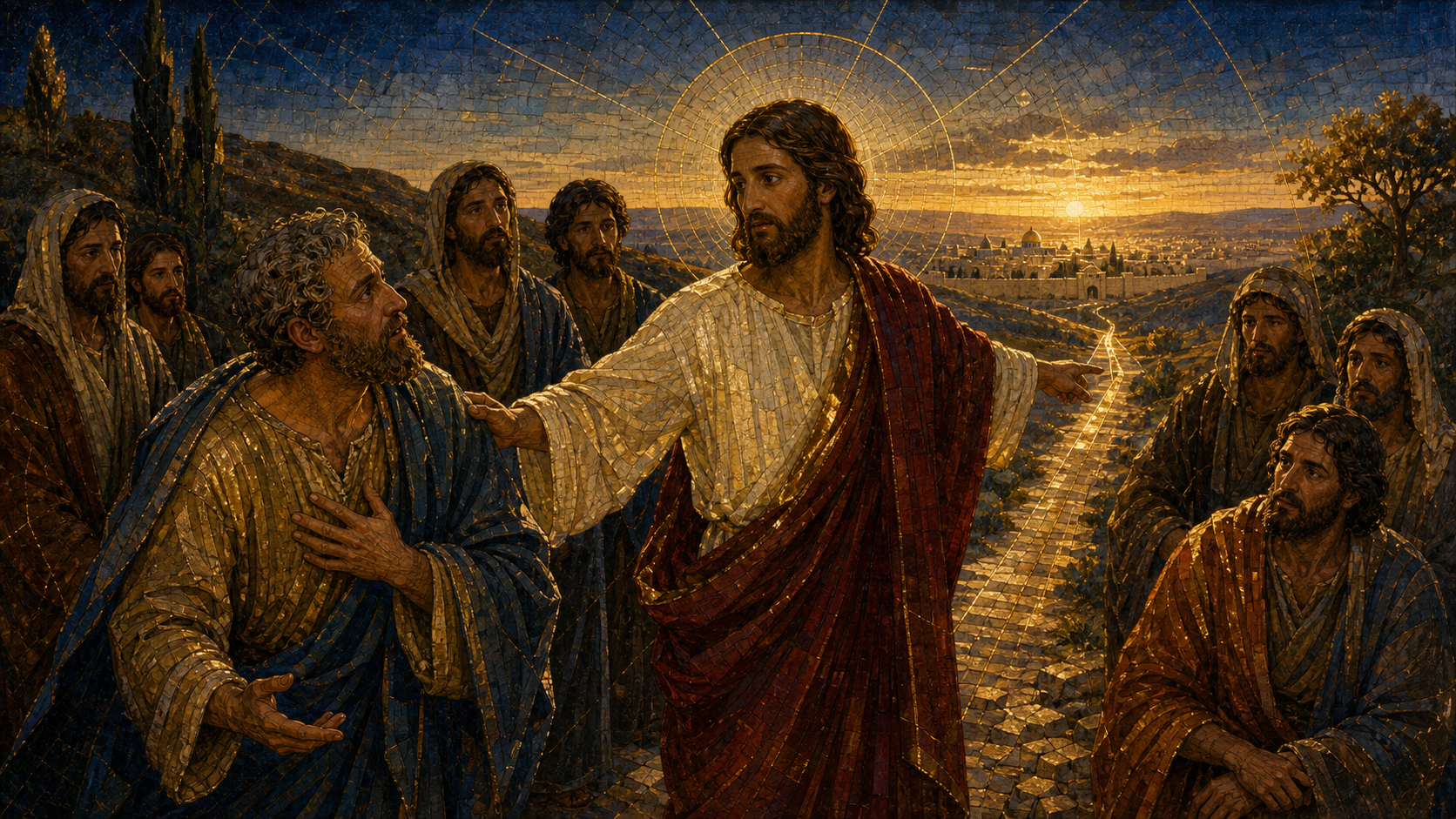
From that time Jesus began to show his disciples that he must go to Jerusalem, suffer many things from the elders, scribes, and chief priests, be put to death, and rise again on the third day.
Matthew 16:21–27
Today’s interpretive key
Jesus reveals that the Messiah’s glory passes through suffering, death, and resurrection. To follow him is to surrender the false security of self-preservation and receive life as a gift shaped by the cross.
The confession at Caesarea Philippi has scarcely left Peter’s lips when Jesus begins to reveal what the title Christ will mean. He must go to Jerusalem, suffer, be killed, and rise on the third day. Peter has received the identity of Jesus from the Father, yet he still imagines the Messiah’s path according to human expectations. His loving protest becomes opposition to the saving will of God. Jesus therefore commands him to return to the proper place of a disciple: behind the Master, following rather than directing. The rebuke then opens into a summons addressed to everyone. Christ’s cross is not an accident to be avoided, and discipleship is not a strategy for protecting the life we have arranged for ourselves. Self-denial means relinquishing the fallen self that resists God so that the renewed person may live in communion with him. The Fathers gathered in the Catena Aurea refuse both despair and sentimentality. Jerome sees Peter’s contradiction arise from ardent affection, but affection cannot make the Passion unnecessary. Gregory describes denial of self as leaving behind what sin has made of us and moving toward the newness to which grace calls us. Origen distinguishes the brief life guarded by fear from eternal life found by fidelity to Christ. Chrysostom finally weighs the whole world against one soul and finds the world unable to ransom what sin destroys. The passage ends not with loss but with the Son of Man coming in the Father’s glory. The road to Jerusalem is thus illuminated from its end: resurrection, judgment, and the triumph of divine love.
Douay-AI, modernized from the public-domain Douay-Rheims Bible. View source ↗
From that time Jesus began to show his disciples that he must go to Jerusalem, suffer many things from the elders, scribes, and chief priests, be put to death, and rise again on the third day.
Peter, taking him aside, began to rebuke him, saying, ‘Lord, be it far from you; this shall not happen to you.’
Jerome sees in Peter an intense zeal and genuine affection for the Lord. Having confessed Jesus as the Son of God and heard the blessing attached to that confession, Peter cannot imagine that such a one should suffer death. He draws Jesus aside so that the correction will not be public and speaks with the confidence of love. Yet his tenderness is joined to ignorance. Peter measures what is fitting for Christ by the honor he expects, rather than by the saving will Christ reveals. The Father’s reading is compassionate but exact: devotion must be taught, because even sincere love can oppose the beloved when it refuses the cross.
But Jesus turned and said to Peter, ‘Go behind me, Satan; you are a scandal to me, because your concern is not for the things of God, but for the things of men.’
Chrysostom distinguishes Peter’s revealed confession from his unaided judgment about the cross. The Father had made known that Jesus is the Christ, but the meaning of the Passion had not yet been disclosed to Peter, and so he reasons from human expectations. Suffering appears shameful and unfitting for the Son of God. Jesus exposes that standard as an obstacle because it opposes the divine purpose hidden within the cross. The severe rebuke does not cancel Peter’s calling; it corrects the disciple’s position. He must cease placing his own estimate before Christ and learn again to follow, allowing God’s wisdom to overturn the measures of earthly glory.
Then Jesus said to his disciples, ‘If anyone wishes to come after me, let him deny himself, take up his cross, and follow me.’
Gregory asks how a person can leave himself and still be the one who follows. His answer distinguishes what humanity has become through sin from what God made by nature and restores by grace. We deny ourselves when we refuse the old pattern and strive toward the new life to which we are called. This is a change for the better: pride is cast down, the fallen self loses its rule, and the person begins to become what he was not. Taking up the cross therefore includes interior conversion, not self-contempt. The disciple follows Christ by surrendering the sinful identity that resists him and receiving a truer life from God.
For whoever would save his life shall lose it; but whoever shall lose his life for my sake shall find it.
Origen reads the saying first in the face of bodily death. A person may cling to the present life through fear and imagine that death ends everything; by refusing fidelity to Christ, he preserves a little time but becomes estranged from eternal life. One who contends for truth even unto death loses only the present life and finds it more fully in Christ. Origen also applies the verse to daily conversion: relinquishing the pleasures that rule the flesh may feel like losing oneself, yet works of piety preserve the soul. In both senses, the promise rests on Christ, whose sake transforms apparent loss into enduring life.
For what does it profit a man if he gains the whole world and suffers the loss of his own soul? Or what exchange shall a man give for his soul?
Chrysostom refuses to compare temporal survival and eternal loss as though they were equal outcomes. Imagine adding the whole world to a life kept safe: none of it benefits the person whose soul perishes. Mastery of countless possessions cannot relieve the misery of the one who has lost his true life. Material goods can sometimes be replaced by other goods, but the soul has no substitute that its owner can offer as ransom. The saying therefore reveals the false arithmetic of temptation. It promises gain while concealing an irreparable cost. Wisdom values every earthly advantage by whether it serves the soul’s communion with God, not by its immediate size.
For the Son of Man shall come in the glory of his Father with his angels, and then he will render to every man according to his works.
Chrysostom hears Christ answer Peter’s fear of death with the promise of glory. The Son will not come in a lesser splendor resembling the Father’s; he comes in the Father’s own glory, revealing their unity. Yet the vision is not offered merely for consolation. Christ joins glory to judgment and will render to each person according to works. This awakens both sobriety and hope: sinners must face the truth of their deeds, while the righteous may look toward the crowns God gives. The Passion is therefore not the end by which disciples should measure Jesus. The crucified Son is the glorious judge, and faithful suffering will be seen in his light.
Peter’s mistake begins in love but becomes dangerous when love refuses the form chosen by God. He wants Jesus safe, triumphant, and untouched by suffering. We recognize the impulse because we often ask faith to secure our plans rather than convert them. Christ does not cast Peter away. He places him behind the Master again, where discipleship can resume. That command is mercy. It frees Peter from trying to design salvation and teaches him to receive a wisdom greater than instinct, fear, or reputation. The cross we take up is never a license to seek harm or remain passive before injustice. It is the daily surrender of everything that keeps us from faithful love: pride that cannot admit error, comfort that silences duty, resentment that protects the old self, and fear that makes obedience conditional. Such surrender feels like loss because false selves fight to survive. Yet Christ promises that life offered for his sake is not extinguished; it is found. The whole world cannot compensate for a soul estranged from its true end, while no sacrifice made in communion with Christ is finally wasted. Today, notice where you are tempted to stand before Jesus and redirect him. Step behind him instead. Entrust to him the future you cannot control, accept the next concrete act of charity or fidelity, and let the hope of resurrection give courage for the road.
Read the source Catena Aurea ↗
Origen attends to the Evangelist’s choice of the word “show.” Christ is not offering bare information about coming events, but opening a mystery to disciples who can receive it only by degrees. The journey, suffering, death, and third-day resurrection belong together in the divine work of salvation. What Jesus begins to reveal here he will display more fully in the events themselves and in the understanding granted afterward. The verse therefore does not leave the Passion as a meaningless defeat. Jerusalem is the place where suffering is endured and death is real, yet also where resurrection discloses the purpose that fear cannot yet perceive.